

Building Trusted Data Foundations for Better Business Decisions
Data creates business value only when it is managed consistently, accurately, and securely. INDA helps enterprises establish comprehensive Data Governance and Data Management capabilities — from data standardization, governance frameworks, and operational processes to data quality management and information security controls.
With a well-governed data foundation, organizations can improve data reliability, enhance operational efficiency, and maximize the value of analytics, reporting, and AI initiatives.
INDA works with enterprises to build sustainable data management practices that enable trusted decision-making, support digital transformation, and unlock the full potential of enterprise data.
Our Services
Data Governance Framework Development
Establish a structured governance model with clear roles, responsibilities, policies, and processes to ensure effective enterprise data management.
Key capabilities:
- Data Governance Framework Design
- Data Ownership & Stewardship Model
- Data Governance Policies & Standards
- Data Management Processes
Data Quality Management
Improve data accuracy, completeness, consistency, and reliability through systematic data quality assessment and improvement processes.
Key capabilities:
- Data Quality Assessment
- Data Quality Rules Definition
- Data Quality Monitoring
- Data Cleansing & Improvement
Master Data Management (MDM)
Create a single, trusted source of core business data, including customers, products, and other critical enterprise entities.
Key capabilities:
- Master Data Model Design
- Master Data Standardization
- Golden Record Management
- Data Synchronization Across Systems
Data Catalog & Metadata Management
Improve data discoverability and usability by creating a centralized data catalog with comprehensive metadata management capabilities.
Key capabilities:
- Data Catalog Implementation
- Metadata Management
- Business Metadata Definition
- Data Discovery Enablement
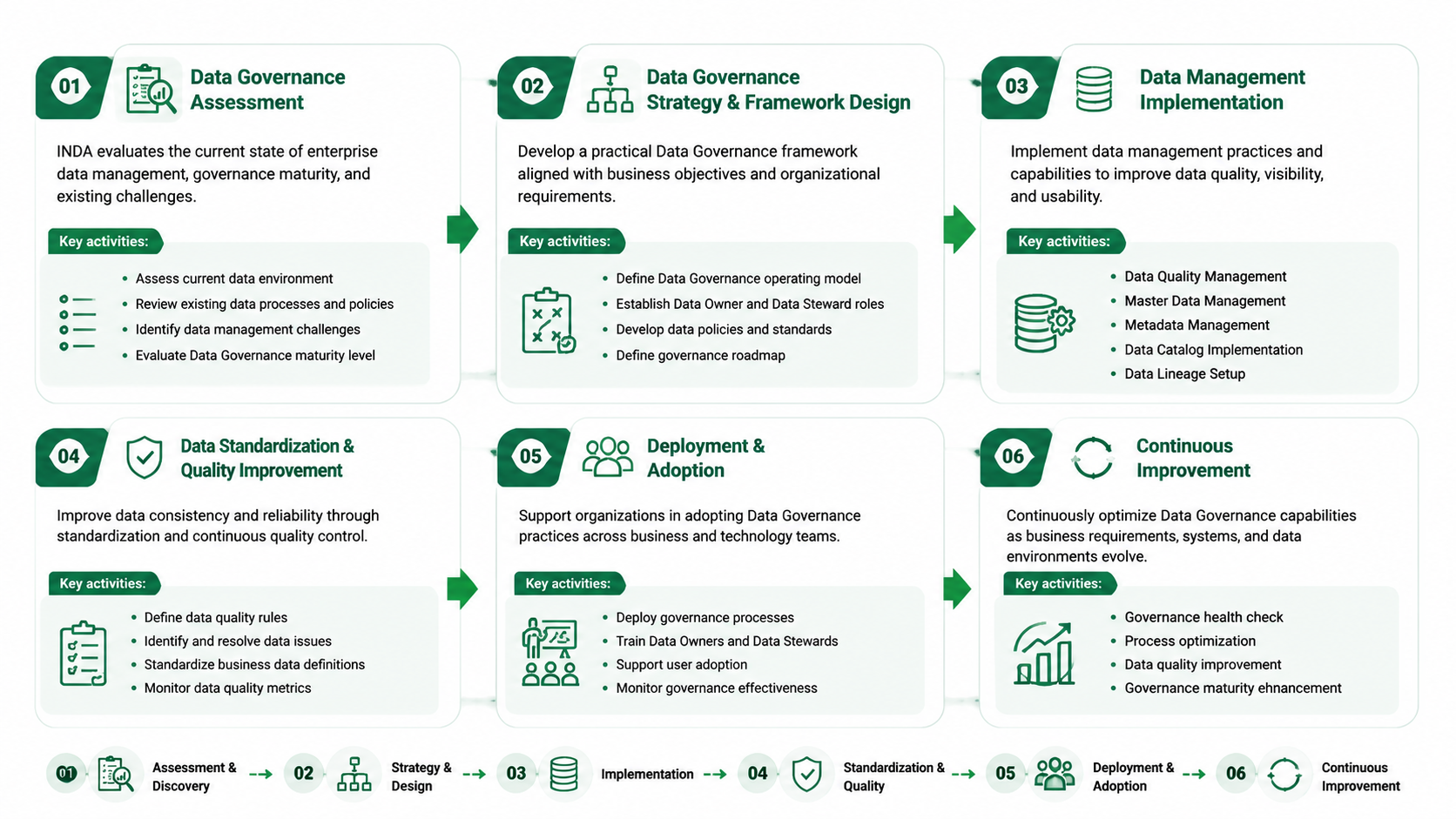
Data Governance & Management Implementation Process
INDA applies a structured implementation methodology to help enterprises establish effective Data Governance capabilities, from current-state assessment and framework design to implementation, adoption, and continuous improvement.
Benefits of Data Governance & Data Management with INDA
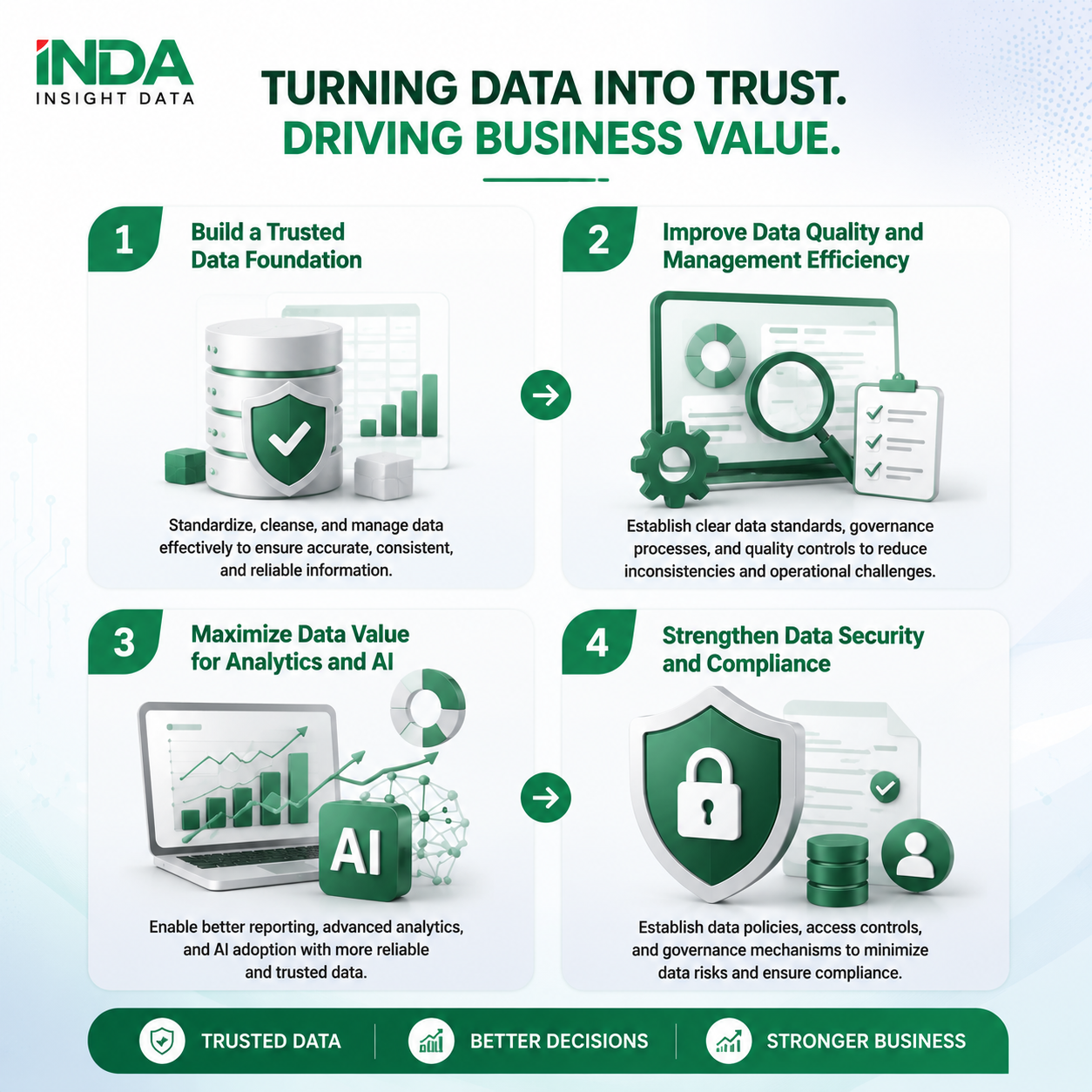
1. Build a Trusted Data Foundation
INDA helps enterprises standardize, cleanse, and manage data effectively, ensuring accurate, consistent, and reliable information for business operations and decision-making.
2. Improve Data Quality and Management Efficiency
Organizations can establish clear data standards, governance processes, and quality controls to reduce data inconsistencies, duplication, and operational challenges.
3. Maximize Data Value for Analytics and AI
A well-governed data foundation enables enterprises to improve reporting capabilities, advanced analytics, and AI adoption with more reliable and trusted data.
4. Strengthen Data Security and Compliance
INDA helps enterprises establish data policies, access controls, and governance mechanisms to minimize data risks and support information security and compliance requirements.
Frequently Asked Questions (FAQ)
1. Why do enterprises need Data Governance when they already have data platforms and reporting systems?
Many organizations already have data warehouses, dashboards, and reporting systems but still struggle with questions such as which data source is trusted, who owns specific data, and why reports from different departments show inconsistent results.
Data Governance helps enterprises establish clear ownership, standardized definitions, governance processes, and quality controls to ensure data is managed consistently across the organization.
2. How can enterprises solve duplicate and inconsistent data across departments?
Data inconsistency often occurs when different departments use separate systems, definitions, and data management processes.
INDA helps organizations standardize data definitions, improve data quality, implement Master Data Management (MDM), and establish trusted data sources so teams can work with consistent and reliable information.
3. Should enterprises implement Data Governance before building Data Platforms or AI solutions?
Data Governance is not always required as the first step, but it plays a critical role in ensuring data reliability as organizations scale Data Platforms, Analytics, and AI initiatives.
Without proper governance, poor data quality, unclear data ownership, and limited data visibility can reduce the accuracy and effectiveness of analytics and AI outcomes.
4. Is Data Governance only suitable for large enterprises with massive amounts of data?
Data Governance is valuable for any organization that relies on data for operations and decision-making.
It is especially important for enterprises with multiple systems such as ERP, CRM, Core Banking, HRM, sales platforms, or multiple business units where consistent data management is required.
5. Can enterprises manage and maintain Data Governance after implementation?
Yes. INDA helps organizations establish sustainable governance operating models, define responsibilities for Data Owners and Data Stewards, and train internal teams to manage and improve data governance capabilities over time.
Contact INDA today to discuss your data challenges and develop a governance strategy aligned with your business objectives.


